
Why Tennis Is Becoming a Platform for Long-Term Brand Partnerships
Published on
by Anna Davey
As brands face increasing pressure to demonstrate return on investment from sponsorship, many are looking beyond short-term event deals and towards partnerships that can deliver value throughout the year.
Tennis offers many of the characteristics brands are looking for from long-term partnerships as it combines global reach, affluent audiences, premium hospitality opportunities and strong brand-safe values. The sport offers brands a platform capable of supporting commercial objectives far beyond awareness alone.
The recently announced Davis Cup by Generali partnership reflects this evolution, illustrating how rightsholders and brands are increasingly building long-term relationships that connect audience relevance, business outcomes and shared values.
In this Insight:

Why Brands Are Thinking Beyond the Event
The launch of Davis Cup by Generali highlights an increasingly common approach within sports sponsorship: brands are creating 360 sponsorship strategies that extend far beyond events.
Historically, many sponsorship agreements were designed primarily around visibility. Brands aligned with a tournament, activated around key moments and focused largely on audience reach.
Today, sponsorship objectives are often broader. Marketing leaders are being asked to demonstrate measurable impact across brand perception, customer engagement, lead generation, hospitality, employee engagement and commercial growth. As a result, organisations are increasingly looking for partnerships that can support multiple business objectives over an extended period.
Tennis is particularly well positioned to deliver this. With a global calendar, affluent audiences, premium experiences and opportunities for engagement throughout the season, the sport provides a platform that extends well beyond a single tournament or activation window.

Why Tennis Continues to Attract Premium Brands
Tennis has long held appeal for premium brands, combining international reach with an audience that spans generations, markets and interests. Data from SPORTFIVE Business Intelligence highlights the breadth of that audience: its fanbase is relatively balanced, comprising 54% men and 46% women, while approximately 40% are aged 16–34 and approximately 40% are 35–54, giving brands the opportunity to connect with a broad range of consumers.
Tennis also attracts an audience that is well suited to brands looking to reach consumers with strong purchasing power. Approximately 40% are in the high-income segment and approximately 40% hold a bachelor’s or postgraduate degree, while fans also show strong interests across business, arts and culture, wellbeing and travel.
It is this combination of global reach, purchasing power and broader lifestyle interests that has helped make tennis a natural home for brands such as Rolex, Emirates, BNP Paribas and Lavazza.
Tennis also provides a premium environment in which brands can engage clients, customers and partners through hospitality and experiences, helping them build stronger relationships as part of the wider partnership.


A Premium Environment for Experiences and Hospitality
One of tennis' most valuable but often overlooked strengths is its ability to facilitate premium experiences.
While audience reach remains important, many sponsorship decisions are increasingly influenced by having the opportunity to support relationship-building with current and potential clients. Tennis provides a unique environment for this.
From hospitality suites at Grand Slam tournaments to networking opportunities and premium guest programmes, tennis creates settings that allow brands to engage audiences in more meaningful ways than traditional advertising alone.
For B2B brands in particular, these experiences can become powerful tools for customer acquisition, retention and business development. Tennis provides a high-end experience suitable to host senior decision-makers and deepen connections in a more meaningful way.
This combination of audience quality and premium access helps to explain why leading brands such as Rolex, Emirates, BNP Paribas and Lavazza have maintained long-standing investments within tennis.
Rather than approaching the sport through isolated campaigns, organisations are able to use tennis as an ongoing platform to strengthen brand positioning, activate globally and build lasting connections with key audiences.

Event Sponsorship to Platform Partnerships
As sponsorship success is no longer measured by just impressions, many organisations have shifted their focus from short-term visibility to partnerships that offer long-term business value.
Increasingly, brands are seeking partnerships that provide integrated opportunities across media, content, experiences and customer engagement.
This has increased demand for title partnerships and naming rights agreements that enable stronger brand awareness and alignment with key audiences.
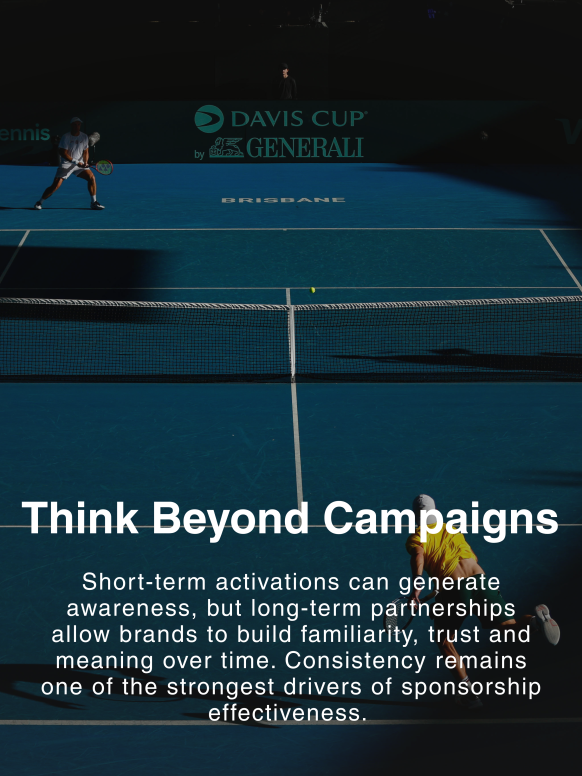
The Davis Cup by Generali partnership is a strong example of this approach. Rather than aligning with a single event activation, Generali has acquired naming rights with one of tennis' most established global team competitions.
The partnership has created opportunities for ongoing storytelling, strong engagement and brand association with an affluent and aligned audience.
The same trend can be seen across tennis. FAGE’s multi-year agreement with the WTA includes the title partnership of the WTA Finals and its role as Official Yogurt Partner, extending the brand’s presence beyond a single event. Its LTA partnership takes a similar approach, activating across multiple summer events to increase reach and strengthen FAGE’s association with tennis.
The result is sponsorship that moves beyond logo placement towards a more integrated relationship that can create value for both sides over time as rightsholders also benefit from greater commercial stability and stronger strategic alignment with partners.

What Makes the Davis Cup Different?
Not all tennis properties offer the same proposition.
While much of professional tennis focuses on individual achievement, the Davis Cup combines many of the characteristics that make major sporting events emotionally compelling.
Players compete not only for personal success but on behalf of their country, creating narratives that resonate strongly with fans.
The team format also introduces a different dynamic to traditional tennis events. Shared goals, collective success and national identity create emotional moments that can be difficult to replicate elsewhere in the sport.
Combined with the competition's international nature, this gives the Davis Cup a distinctive position within the tennis landscape.
The emotional aspect allows brands to connect with audiences in ways that extend beyond reach alone. It allows sponsorship to tap into passion, pride, belonging and shared experiences, helping create stronger and more memorable brand associations.
These qualities are particularly valuable in an environment where consumers are increasingly looking for authenticity and meaningful connections from the brands they engage with.
What Brands Can Learn from the Generali Partnership




Why Tennis Delivers Long-Term Partnership Value
The most effective sponsorship partnerships are no longer judged solely by visibility. Brands increasingly seek platforms that can deliver audience relevance, meaningful engagement, premium experiences and long-term commercial value.
Tennis is particularly well positioned to support these objectives, combining global reach with affluent audiences, and a unique ability to facilitate relationship-building through hospitality and experiences.
Ultimately, the strongest partnerships are those that align brand purpose, audience needs and long-term business objectives, creating sustainable value for both sides over time.
Whether you're a brand looking to connect with new audiences or a rights holder seeking to maximise partnership value, SPORTFIVE can help create meaningful collaborations that deliver results for fans, partners and the wider game.
Sponsorship is the financial support for a sporting event, organisation or athlete by an outside body, for the mutual benefit of both parties. At the professional level this tends to be by companies, to raise the profile of their brand by associating it with the athlete.
The company aims to generate brand awareness and customer recognition, whilst the event, organisation or athlete receives a boost in funding.
A popular example is a brand logo printed on a team shirt. Visibility is guaranteed, even more so in the modern world with social media and online highlights.
In the land of media and marketing rights today, there is no cookie-cut solution for brands, and a simple logo placement will not provide the sufficient return on investment (ROI) for sponsorship, nor does it give their target audience the “why?” - the reason to spend their money and engage with the product.
Companies investing in sports sponsorship need to look at the bigger picture to engage with fans and not rely on just one piece of inventory.
Sponsors get the opportunity to showcase their brand and products to a greater audience of varying demographics. The global nature of sport today means that athletes feature within competitions that attract millions, sometimes billions of viewers worldwide. By placing their brand within this sphere, organisations can catch the attention of people around the world.
In modern times, the value of social media cannot be underestimated. Even traditional forms of sponsorship are likely to appear on social media, opening the brand up to an even wider audience - even appearing in new territories.
Through placements on jerseys and advertising boards, sponsors get a high visual presence and become part of the action. If visibility is the core objective, then it's a surefire way to succeed, whether that’s inside the stadium, TV or online.
It is the emotional engagement which sets sponsorships in sport apart from almost all other forms of advertising and sponsoring initiatives. Traditional advertising platforms such as TV can attain similar reach figures to sport, but can’t compete with sports fans’ engagement.
Sports partnerships can be defined as a new level of sports sponsorships: they represent a tighter-fitted collaboration between sports and businesses or brands.
Partnerships are less based on standard marketing benefits and more tailor-made on the company’s specific needs, and several company levels are involved in the sports project: from marketing to Research & Development, from production to management.
Partnerships tend to be focused on the improvement and development of specific products or services, and are usually long-term. They can be very effective on the customers and clients, who witness a true affinity with some of the world’s most winning properties. Partnerships are often multidimensional and multi-layered, with the development of new tech, as well as new products and the marketing that comes with them.
Partnership marketing is an important part of the sports industry. It involves collaboration between a sports team, league, or event and a brand or company. This collaboration can take many forms, such as sponsorship, product placement, or joint promotions. The goal of partnership marketing is to benefit both parties by increasing exposure, revenue, and brand recognition.
By partnering with a sports team or league, a brand can reach a large audience of fans who are passionate about their sport. This can lead to increased brand recognition and customer loyalty, as well as increased sales of particular products. Additionally, by offering special promotions or experiences, teams and brands can create a more memorable and enjoyable experience for fans.
When selecting the right type of partnership, teams and brands should consider factors such as brand values, fan demographics, and the overall image of the sport, to ensure it remains authentic whilst still connecting with the target audience.
Sports sponsorship lets brands create emotional content and become an integral part of fans’ daily lives. Every year, over 58 billion euros* are invested in sports sponsorship around the world as a way of reaching and acquiring customers through fan engagement.
€58bn* global volume in sports sponsorship in 2018
A rightsholder is a person or organisation that owns the legal rights to something.
In the sporting world, sport entities (sport federations, leagues, clubs, event organisers etc) who manage sport events are on the supply side and sell various types of rights to their events and products.
This could be the media rights, giving broadcasters the rights to air their events, or even sponsorship and naming rights, to have a company’s branding in stadiums or shown on certain moments on broadcast.
Naming rights sponsoring refers to a marketing strategy where a company or organisation pays for the privilege of having its brand name attached to a venue, event, competition or facility.
In exchange for financial support, the sponsoring entity's name becomes an integral part of the associated asset. This commonly occurs with sports stadiums, arenas, concert halls, and even major events.
The sponsor's name is prominently featured in the official title, gaining visibility and exposure to a large audience. Naming rights agreements are often long-term and involve substantial financial commitments, contributing to the funding of the facility or event.
This form of sponsorship not only serves as a branding opportunity but also as a means of supporting the infrastructure or programming associated with the sponsored entity. It's a symbiotic relationship where the sponsor gains visibility, and the sponsored entity receives crucial financial backing.
Marketing is crucial in sports for several reasons. Firstly, it enhances the visibility and popularity of sports teams, athletes, and events, attracting a broader audience and increasing fan engagement. Effective marketing strategies help create a strong brand image, fostering a connection between fans and their favourite teams or athletes. This emotional connection often leads to increased fan loyalty and support, translating into higher ticket sales, merchandise purchases, and overall revenue for sports organisations.
Moreover, marketing in sports plays a pivotal role in securing sponsorships and partnerships. Brands are drawn to sports entities with a significant and engaged fan base, offering lucrative opportunities for sponsorship deals. These partnerships not only provide financial support but also contribute to the overall prestige and marketability of the sports brand.
In the contemporary landscape, digital marketing and social media have become integral components of sports marketing, allowing for real-time interaction with fans, personalised content delivery, and global reach. Social media platforms serve as powerful tools to amplify the sports narrative and engage with fans on a more intimate level.
Ultimately, successful sports marketing goes beyond promoting matches and events; it cultivates a culture, builds communities, and transforms sports into a compelling and marketable entertainment product, driving the industry's growth and sustainability.
SPORTFIVE is a global sports marketing agency that specialises in sports rights, marketing, and entertainment. We work with sports organisations, clubs, and brands to create and optimise commercial opportunities in the sports industry. SPORTFIVE is involved in various aspects of sports business, including the sale of broadcasting rights, sponsorship and partnership management, stadium naming rights, and other marketing initiatives.
SPORTFIVE creates innovative, engaging solutions that are worthy of the incredible sports, athletes and partners we work with, and the passionate fans who follow them. Campaigns are built collaboratively, based on trust and transparency, and enabled by a deep understanding of the industry, the agency’s global reach, digital intelligence and creative courage.
The result is gamechanging sports partnerships that redefine standards in the sports and entertainment space.
SPORTFIVE believes in the power of five - bringing brands, rights holders, media platforms, fans and ‘us’ together through sport.
SPORTFIVE is a global sports marketing agency that specialises in various aspects of the sports and entertainment industry. The agency works with sports organisations, teams, and brands to optimise commercial opportunities.
One of SPORTFIVE's key areas of focus is the sale and management of sports media rights, including broadcasting and digital distribution deals. They negotiate and facilitate partnerships, sponsorships, and naming rights for sports entities, helping them enhance their brand value and revenue streams.
Additionally, SPORTFIVE provides expertise in marketing strategies, assisting clients in building strong connections with their target audiences. Their comprehensive approach spans across the sports business landscape, from media rights to sponsorship management, contributing to the overall growth and success of their clients in the dynamic world of sports marketing.
SPORTFIVE operates across a broad spectrum of sports, engaging with diverse disciplines and events globally.
The agency has a comprehensive portfolio that spans popular team sports, individual sports, and major sporting events. They are involved in football (soccer), which is a significant focus given its global popularity.
Additionally, SPORTFIVE is active in sports such as basketball, tennis, golf, motorsports, american football, multi-sport events such as the Olympic and the world of esports & gaming.
The agency's reach extends to various regions and markets, allowing them to navigate the unique landscapes of different sports industries.
Whether facilitating media rights deals, managing sponsorships, or developing marketing strategies, SPORTFIVE's involvement spans across a wide array of sports, showcasing their versatility and ability to cater to the commercial needs of sports organisations and brands in the ever-evolving sports market.
Sponsorship is a distinct and widely used form of marketing. It is a strategic business alliance where a brand provides financial or in-kind support to an event, team, athlete, or organisation in exchange for promotional benefits.
This collaboration aims to enhance brand visibility, build positive associations, and engage target audiences. Sponsorship is an integral part of a company's marketing strategy, contributing to the overall promotional mix alongside advertising, public relations, and personal selling.
It allows brands to connect with consumers in a meaningful way, leveraging the popularity and appeal of the sponsored entity to achieve specific marketing objectives. Whether in sports, entertainment, or other industries, sponsorship is a powerful tool for creating brand recognition, fostering customer loyalty, and aligning with the values and interests of the target market.
A good sponsorship fit is characterised by the alignment of the sponsoring brand with the sponsored entity in a way that creates mutual value and resonates with the target audience. Several factors contribute to a strong sponsorship fit:
Relevance: The sponsorship should align with the values, image, and interests of both the sponsoring brand and the sponsored entity, creating a natural and authentic connection.
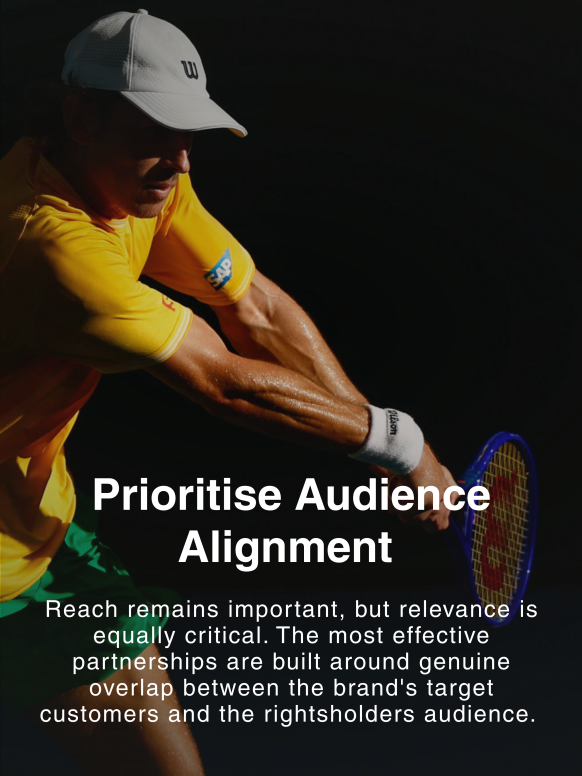
Target Audience Alignment: The audience of the sponsored entity should closely match the target demographic of the sponsoring brand, ensuring that the partnership reaches the right consumers.
Brand Image Consistency: The sponsorship should enhance, not contradict, the overall image and messaging of the sponsoring brand, contributing positively to its perception.
Engagement Opportunities: A good fit provides meaningful opportunities for engagement, whether through events, activations, or collaborative campaigns, ensuring that the partnership goes beyond mere visibility.
Mutual Goals: Both the sponsor and the sponsored entity should share common objectives and goals, fostering a collaborative approach to the partnership.
Long-Term Viability: Ideally, a good sponsorship fit has the potential for a long-term relationship, allowing both parties to grow and evolve together.
Ultimately, a successful sponsorship fit is one where the collaboration is strategic, authentic, and creates a win-win scenario for both the sponsor and the sponsored entity.
Choosing the right sponsorship for your goals involves strategic consideration of your brand objectives and target audience. Follow these steps:
Define Objectives: Clearly outline your marketing and business objectives for the sponsorship, whether it's brand visibility, customer engagement, or community outreach.
Know Your Audience: Understand your target audience and align sponsorship opportunities with their demographics, interests, and behaviours.
Relevance: Choose sponsorships that align with your brand values and resonate with your audience, creating authentic connections.
Evaluate Opportunities: Assess potential sponsorships based on factors like reach, engagement potential, and the alignment of the sponsored entity with your brand image.
Budget Considerations: Evaluate the financial aspects, ensuring the sponsorship aligns with your budget while delivering significant value.
Negotiate Terms: Work with the sponsored entity to negotiate terms that meet your goals, ensuring a mutually beneficial partnership.
By aligning sponsorships with your brand objectives, audience demographics, and values, you can choose opportunities that effectively contribute to the success of your marketing and business goals.
If you are interested in becoming a sponsor, the specific contact person or department will depend on the entity or property you want to sponsor.
Sports Marketing Agencies: Agencies like SPORTFIVE specialise in connecting sponsors with sports opportunities. Contact their business development or sponsorship departments.
Sports Teams or Clubs: Contact the sponsorship or partnership department within the sports team or club.Look for information on the team's official website regarding sponsorship opportunities and contact details.
Sports Events or Leagues: Reach out to the event organiser's sponsorship or partnership department. Event websites often have dedicated sections providing information for potential sponsors.
Athletes: Contact the athlete's management or agent, who typically handles sponsorship inquiries. Some athletes manage their sponsorships independently, and contact information may be available on their official website or social media.
Sports Federations: Reach out to the sponsorship or business development department of the relevant sports federation. Check the official website of the federation for sponsorship guidelines and contact information.
For specific details, visit the official website of the entity you are interested in sponsoring or directly inquire through the provided contact information. If the information is not readily available, consider reaching out to the general contact line or email provided on their official platforms, and they can direct you to the appropriate department.
The cost of sponsorship can vary significantly based on various factors, and there is no one-size-fits-all answer. Several elements influence the cost of sponsorship:
Property or Entity: The popularity, reach, and significance of the sponsored property, whether it's a sports team, event, athlete, or organisation, impact the cost.
Visibility and Exposure: The level of visibility and exposure offered to sponsors, such as logo placement, media coverage, and audience size, affects sponsorship pricing.
Duration of Sponsorship: Short-term sponsorships may cost less than long-term commitments. Multi-year agreements often come with discounted rates.
Event Type: Major events or high-profile sports competitions generally command higher sponsorship fees.
Industry and Demographics: The industry and demographics of the target audience also influence costs, as sponsorships reaching a highly sought-after demographic may be more expensive.
Geographic Scope: Local, regional, or global sponsorships have varying costs based on the geographic reach of the sponsored property.
To determine the cost, it's crucial to consider your specific goals, the value of the sponsorship in terms of exposure and engagement, and the negotiation process with the sponsored entity. Costs can range from a few thousand dollars for local sponsorships to millions for global, high-profile partnerships.
The duration of naming rights agreements for stadiums can vary widely and is subject to negotiations between the sponsoring company and the entity that owns or manages the venue. Naming rights deals typically last for a specified number of years, and the duration can range from a few years to several decades.
Short-term agreements might last between 3 to 5 years, while longer-term agreements can extend to 10, 15, 20 years, or even more. The length of the deal often depends on factors such as the prominence and popularity of the venue, the financial terms of the agreement, and the strategic objectives of both the sponsor and the sports entity.
In some cases, naming rights agreements include options for renewal or extension, providing flexibility for both parties to continue the partnership if it has been mutually beneficial. The terms and duration of naming rights deals are typically outlined in the formal contracts negotiated between the sponsor and the venue.
The value of naming rights for stadiums is influenced by various factors, and it can be challenging to pinpoint an exact figure. Several elements contribute to determining the value of naming rights:
Venue Size and Popularity: Larger and more prominent stadiums or arenas in popular sports leagues often command higher naming rights values due to increased visibility and audience reach.
Market and Location: The geographic location of the venue and the market it serves play a crucial role. Naming rights for venues in major cities or regions with higher population density and market demand tend to have higher values.
Sports Team Success: The success and popularity of the sports teams that use the venue contribute to naming rights value. Successful teams attract more attention and a larger fan base.
Economic Conditions: The economic climate at the time of negotiation can impact naming rights values. During economic downturns, companies may be more conservative in their sponsorship spending.
Duration of Agreement: Longer-term agreements often result in more substantial overall values. Companies may negotiate favourable terms for extended commitments.
Additional Benefits: The inclusion of additional benefits, such as marketing opportunities, hospitality access, or exclusivity clauses, can enhance the overall value of naming rights.
To determine the value, organisations typically engage in negotiations based on these factors, and the final value is agreed upon through a mutually beneficial arrangement between the sponsoring company and the venue owner or management. Values can range from millions to tens of millions of dollars over the term of the naming rights agreement.
Choosing the right target audience in sports marketing is crucial for creating effective and resonant campaigns. Here are tips and strategies to identify and engage the appropriate audience:
Define Marketing Objectives: Clearly outline your marketing goals. Whether it's brand awareness, fan engagement, or product sales, understanding your objectives guides audience selection.
Understand Your Brand: Identify the core values and identity of your brand. Understanding your brand's personality helps in aligning with an audience that shares similar values.
Analyse Demographics: Gather demographic data such as age, gender, location, income, and education. This information helps create a profile of your ideal audience.
Study ‘Psychographics’: Go beyond demographics to understand the psychographics of your audience - values, interests, lifestyles, and attitudes. This provides deeper insights into consumer behaviour.
Consider Fan Affiliation: If you are associated with a sports team or event, consider the existing fan base. Targeting fans of the specific sport or team ensures a built-in audience.
Utilise Market Segmentation: Segment your target market based on shared characteristics or behaviours. This allows for more personalised and targeted marketing efforts.
Evaluate Media Consumption Habits: Understand where your target audience consumes sports content. Whether it's through TV, social media, or live events, tailor your strategy to their preferred channels.
Leverage Analytics and Data: Utilise data analytics to track consumer behaviour, engagement metrics, and market trends. This data-driven approach helps refine your targeting over time.
Engage in Market Research: Conduct surveys, interviews, or focus groups to gather direct feedback from your audience. This qualitative data can provide valuable insights.
Monitor Competitor Strategies: Analyse the sports marketing strategies of competitors targeting a similar audience. Identify gaps or opportunities to differentiate your approach.
Embrace Personalization: Tailor your messaging and campaigns to resonate with specific segments within your target audience. Personalization enhances engagement and connection.
Stay Flexible and Adaptive: Consumer behaviours evolve, and trends change. Stay flexible and adaptive, adjusting your strategies based on shifts in the market.
Utilise Social Listening: Monitor social media conversations to understand what your target audience is discussing, sharing, and engaging with. Social listening provides real-time insights.
Create Buyer Personas: Develop detailed buyer personas representing your ideal customers. This helps humanise your target audience and guides content creation.
Engage in Continuous Feedback: Encourage feedback from your audience through surveys, comments, or reviews. Continuous feedback helps refine your understanding of their preferences.
By combining these strategies, sports marketers can identify, understand, and engage their target audience more effectively, leading to successful campaigns and a stronger connection with consumers.
